What Siding Repair Involves
Siding repair is the process of identifying, removing, and replacing damaged vinyl siding panels or sections on your home's exterior. Unlike a full siding replacement, repair work targets specific problem areas while preserving the surrounding material that remains in good condition. The goal is to restore your home's protective envelope and visual appearance without the expense of re-siding the entire structure.
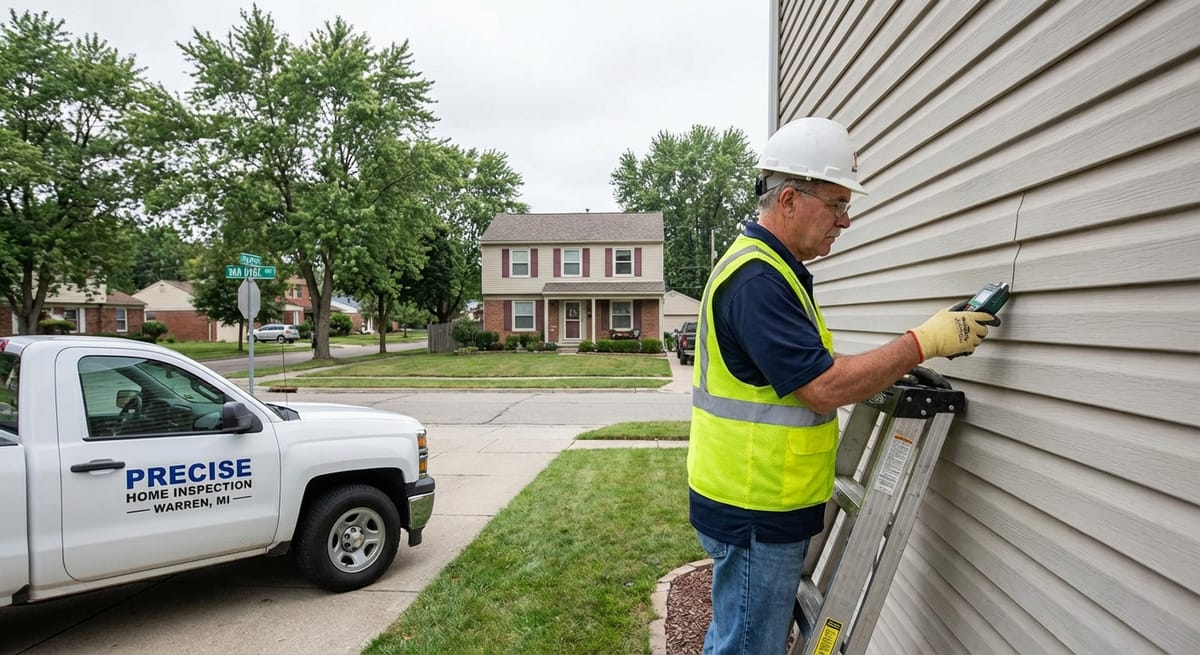
A typical siding repair project in Warren begins with a thorough inspection of your home's exterior. Our technicians examine every panel, checking for cracks, holes, warping, buckling, loose sections, and signs of moisture infiltration behind the siding. We also inspect the underlayment, house wrap, and sheathing beneath damaged panels because surface damage sometimes masks deeper issues that must be addressed for a lasting repair.
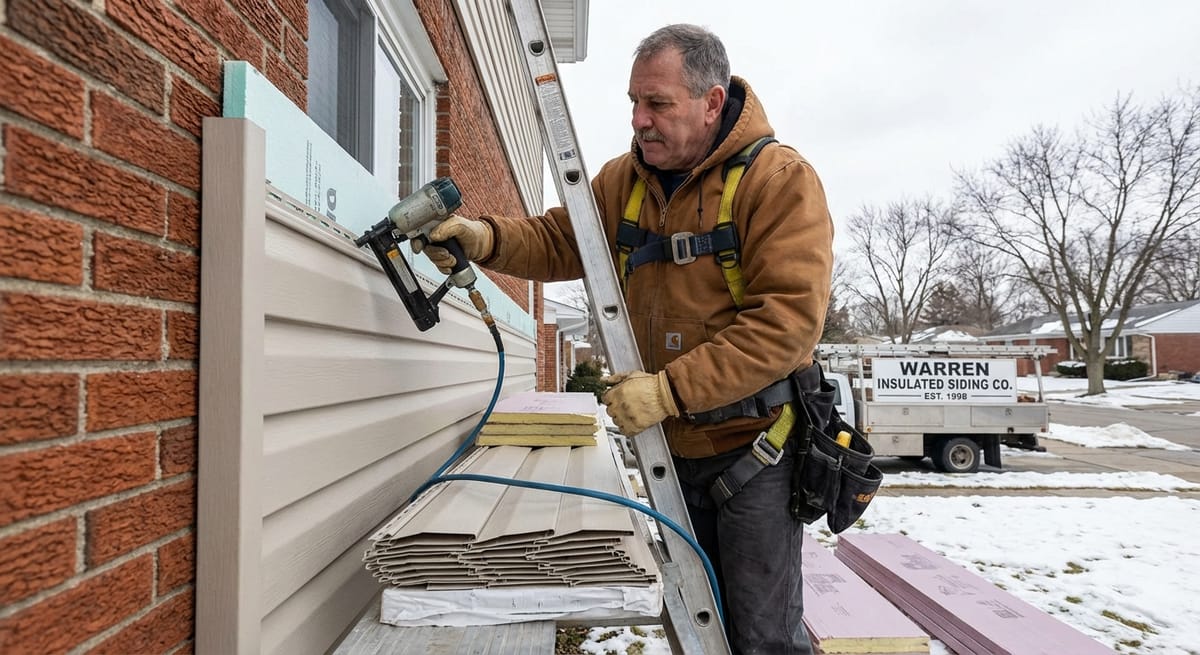
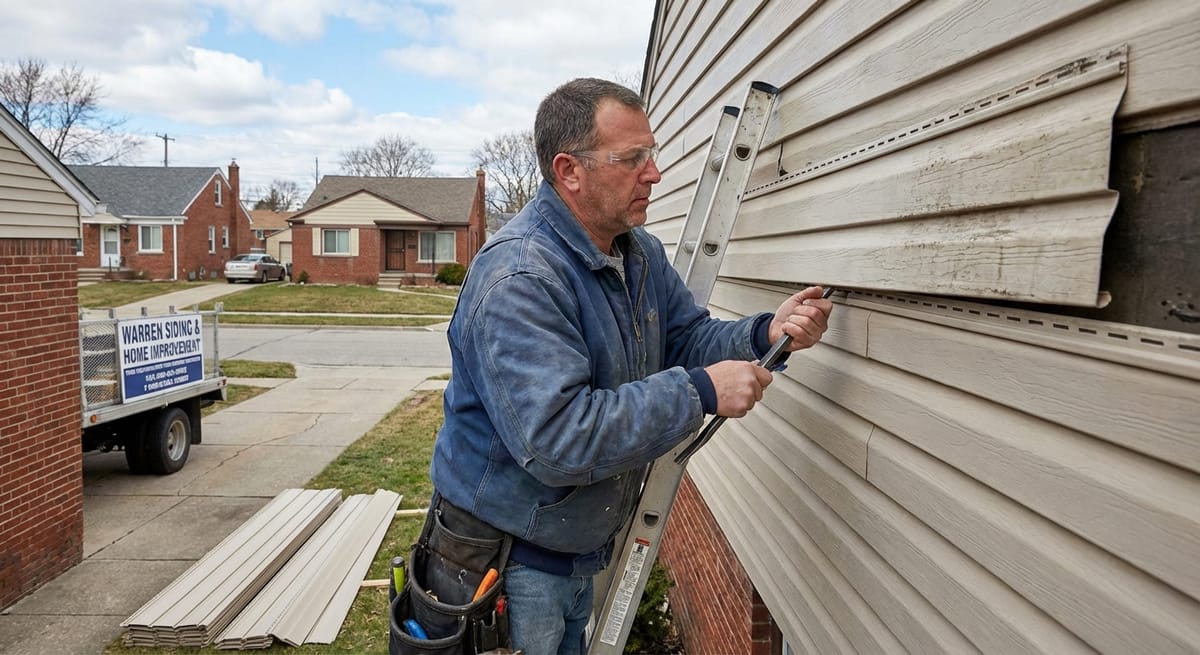
Once the assessment is complete, the repair process involves carefully unlocking and removing damaged panels using specialized siding removal tools called zip tools. These tools slide beneath the interlocking edges of vinyl panels, disengaging them without damaging adjacent pieces. Replacement panels are then cut to precise measurements, color-matched to your existing siding, and locked into place. Proper fastening technique is critical with vinyl siding—nails must be centered in the mounting slots and driven to allow a slight gap for thermal expansion and contraction. This technical detail is one of the most common mistakes inexperienced installers make, and incorrect fastening leads to buckling and waviness that looks worse than the original damage.
When You Need Siding Repair
Several signs indicate your Warren home needs siding repair. Recognizing these early prevents small problems from becoming expensive failures that require full replacement.
- Visible cracks or holes: Any breach in your siding allows moisture, insects, and cold air into the wall cavity. Even hairline cracks expand over freeze-thaw cycles common in Michigan winters.
- Warped or buckled panels: Panels that bow outward or appear wavy have likely been improperly installed or exposed to excessive heat from nearby grills, fire pits, or reflective windows.
- Loose or hanging sections: Panels that rattle in the wind or hang away from the wall have lost their lock engagement or their fasteners have failed.
- Fading or discoloration in patches: While overall fading is cosmetic, sudden discoloration in isolated areas can signal moisture trapped behind the panel, causing mold or mildew growth.
- Increased energy bills: Damaged siding reduces your home's insulation envelope. If your heating costs rise without explanation, compromised siding could be the cause.
- Visible mold or mildew: Fungal growth on or behind siding panels signals persistent moisture problems that need immediate attention to prevent wood rot in the sheathing beneath.
- Storm damage: Warren experiences severe thunderstorms, hail, and high winds throughout the year. After any major weather event, inspect your siding for impact damage, dents, or panels that have been torn away.
Why Siding Problems Happen in Warren
Understanding why siding fails helps homeowners in Warren make informed decisions about repair and maintenance. Several factors specific to this region contribute to siding damage.
Michigan Weather Extremes
Warren's climate puts tremendous stress on vinyl siding. Summer temperatures can exceed 90°F, causing vinyl to expand significantly, while winter temperatures regularly drop below 10°F, making the material brittle and vulnerable to impact cracking. This constant thermal cycling stresses panels at their fastening points and interlocking joints. Ice storms and wind-driven rain push moisture behind panels through any gap, and repeated freeze-thaw cycles turn small cracks into large failures.
Improper Original Installation
Many siding failures trace back to installation shortcuts. Panels nailed too tightly cannot expand and contract with temperature changes, resulting in buckling and waviness. Panels fastened off-center in the nail slot crack at the fastener point. Insufficient overlap between panels and around trim pieces creates gaps where water penetrates. Our repair technicians frequently encounter these installation defects when servicing homes throughout Warren.
Age and UV Degradation
Vinyl siding is durable, but ultraviolet radiation from the sun breaks down its molecular structure over time. South-facing and west-facing walls receive the most sun exposure and deteriorate faster. As vinyl ages, it becomes less flexible, more prone to cracking, and loses its original color. Older siding also tends to have thinner walls and less UV-resistant formulations than modern materials.
Impact Damage
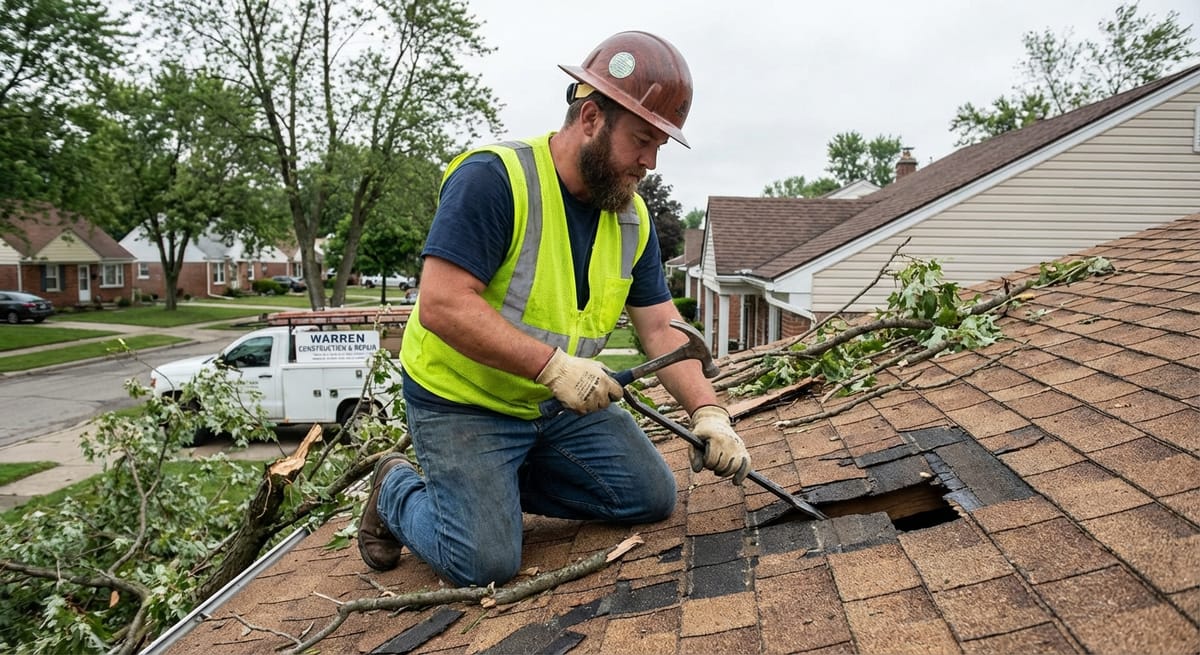
Hailstones, thrown rocks from lawnmowers, baseballs, fallen tree branches, and even woodpecker activity can crack or puncture vinyl siding. Impact damage is particularly problematic in cold weather when the material is at its most brittle.
What Affects the Cost of Siding Repair
Every siding repair project is unique, and several factors influence the final cost. Understanding these variables helps Warren homeowners plan and budget effectively.
- Extent of damage: A single cracked panel is a straightforward repair. Multiple damaged sections across several walls require more material, more labor, and more time. The scope of damage is the single biggest cost factor.
- Accessibility: Ground-level repairs are simpler and faster than work on upper stories that require ladders, scaffolding, or specialized equipment. Homes with steep landscaping, dense plantings close to the foundation, or obstacles near the damaged area may also increase labor time.
- Color and profile matching: Vinyl siding comes in hundreds of colors and profiles. If your existing siding is a current production color, replacement panels are readily available. Discontinued colors or older profiles may require sourcing from specialty suppliers or considering a partial re-side of one wall face to maintain a uniform appearance.
- Underlying damage: If moisture has penetrated behind the siding, the house wrap, sheathing, or framing beneath may need repair before new panels can be installed. Rotted sheathing or compromised structural members add materials and labor to the project.
- Season and timing: Emergency storm damage repairs during peak season may cost more than planned maintenance repairs scheduled during slower periods. Planning ahead when possible allows for more competitive pricing.
Repair vs. Replacement: Making the Right Decision
One of the most important decisions Warren homeowners face is whether to repair existing siding or invest in full replacement. The right answer depends on several factors specific to your home's condition.
When Repair Makes Sense
Siding repair is the practical choice when damage is localized to specific areas and the rest of your siding remains in solid condition. If a storm cracked three panels on one wall but the other walls look great, targeted repair restores protection at a fraction of replacement cost. Repair also makes sense when your siding is relatively new and the damage is from a specific event rather than general deterioration.
When Replacement Is the Better Investment
Full replacement becomes the smarter option when damage is widespread, when repairs keep recurring in different areas, or when your siding has reached the end of its effective lifespan. If you find yourself calling for repairs every year or two, the cumulative repair costs may exceed what a one-time replacement would cost. Siding that is severely faded, chalky to the touch, or brittle throughout has degraded beyond the point where spot repairs provide lasting results. Replacement is also worth considering if you want to upgrade to thicker, more insulated panels that improve energy efficiency.
The Honest Assessment
Our technicians at Warren Home Siding provide straightforward assessments. We will not recommend full replacement when a repair will solve your problem, and we will not patch failing siding that needs to be replaced. Our inspection process evaluates the overall condition of your siding system, not just the visible damage, so you get an honest recommendation based on what will deliver the best long-term value for your home.
Our Siding Repair Process in Warren
Warren Home Siding follows a systematic approach to every repair project, ensuring consistent quality and lasting results for homeowners across the Warren area.
- Detailed inspection: We examine your entire siding system, documenting all damage with photos and measurements. This comprehensive assessment ensures we identify every issue, not just the obvious ones.
- Material sourcing: We match your existing siding color, profile, and thickness. Our relationships with major vinyl siding manufacturers give us access to current and discontinued product lines for the best possible match.
- Careful removal: Damaged panels are removed using proper siding tools that protect adjacent panels from unnecessary damage. We inspect the underlayment and sheathing behind every removed panel.
- Substrate repair: If moisture has caused damage to house wrap, sheathing, or framing, we address these issues before installing new siding. Covering up hidden damage guarantees future problems.
- Precision installation: Replacement panels are cut to exact measurements and installed using manufacturer-specified fastening techniques. Proper nail placement, expansion gaps, and overlap dimensions ensure the repair performs as well as or better than the original installation.
- Final inspection and cleanup: We verify panel alignment, lock engagement, and visual consistency with the surrounding siding. All debris and old materials are removed from your property.
Protecting Your Siding After Repair
Once your siding repair is complete, simple maintenance habits extend the life of your vinyl siding and help you catch new problems before they escalate.
- Annual washing: Clean your siding once a year with a garden hose and soft brush or a low-pressure washer. This removes dirt, pollen, and mildew that can stain and degrade the material over time.
- Seasonal inspections: Walk around your home each spring and fall, looking for new cracks, loose panels, or gaps. Early detection is the key to affordable repairs.
- Trim vegetation: Keep bushes, vines, and tree branches away from your siding. Plants trap moisture against the surface and can physically damage panels as they grow.
- Watch heat sources: Keep grills, fire pits, and outdoor heaters at least ten feet from vinyl siding. Radiated heat warps and melts vinyl quickly, and this type of damage is not covered by manufacturer warranties.
- Address caulking: Check the caulk around windows, doors, and trim pieces where they meet your siding. Deteriorated caulk allows water behind your panels, leading to the same moisture problems your repair addressed.